YouTube Monetization Criteria: Complete Guide for 2026
Introduction
Starting a YouTube channel is easier than ever, but turning it into a source of income requires more than uploading videos. YouTube has specific eligibility requirements, content policies, and monetization rules that creators need to understand before expecting revenue.
If you want to earn from your videos, understanding the youtube monetization criteria through the YouTube Partner Program (YPP) is the first step you need to take
. Creators can qualify through long-form video watch hours or Shorts views, depending on the level of access they want.
You also need original, valuable content that follows YouTube’s policies. Meeting the numbers alone does not guarantee approval because YouTube reviews channels before accepting them into the program.
Summary
YouTube currently has two important YPP levels:
Earlier YPP access: 500 subscribers, 3 public uploads in the last 90 days, plus either 3,000 public watch hours in the last 12 months or 3 million public Shorts views in the last 90 days.
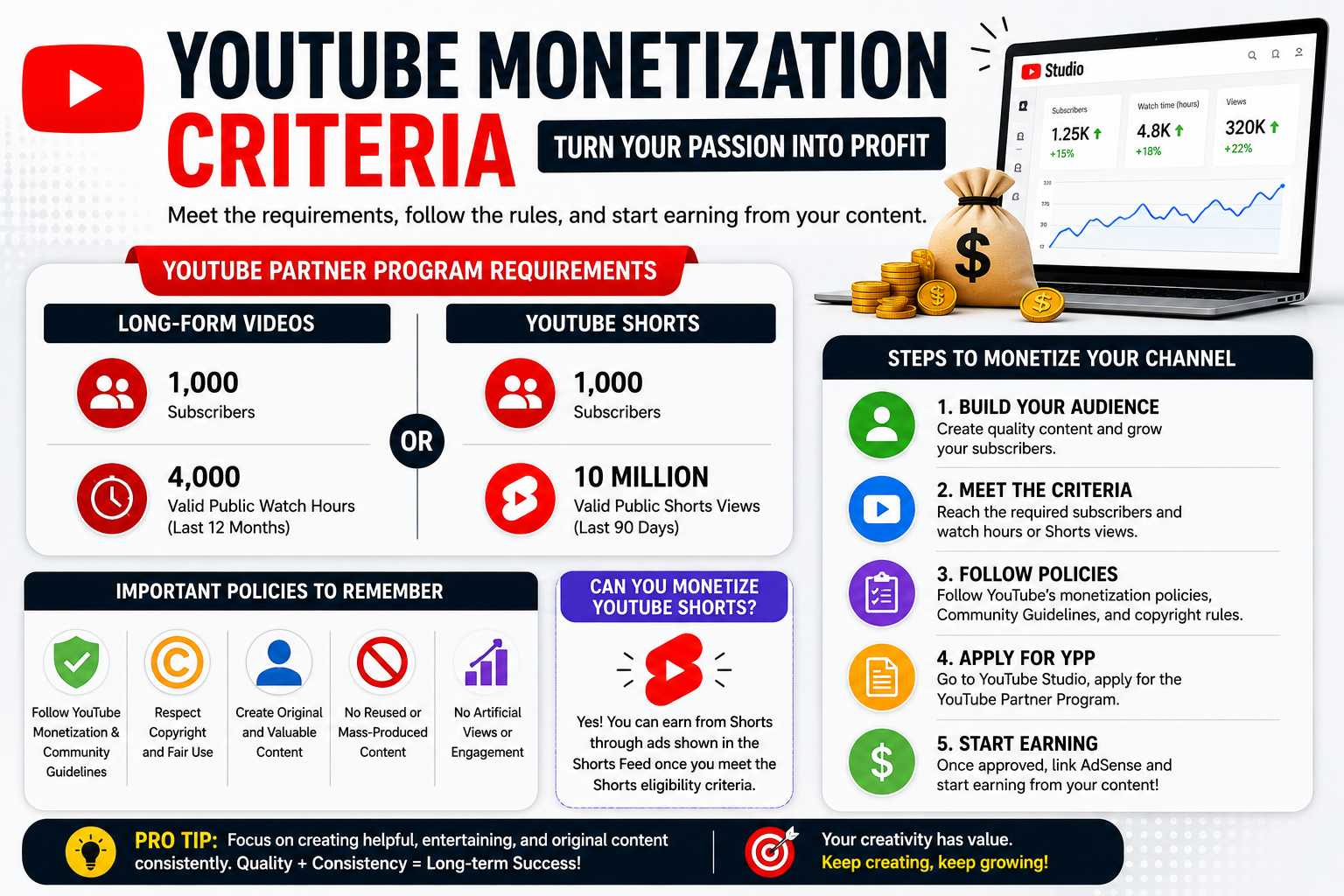
Ad revenue eligibility: 1,000 subscribers plus either 4,000 valid public watch hours in the last 12 months or 10 million valid public Shorts views in the last 90 days.
Shorts Feed watch time does not count toward the 4,000-hour long-form requirement.
Your content must follow YouTube’s monetization, Community Guidelines, copyright, and advertiser-friendly policies.
Repetitive, mass-produced, or insufficiently original content can prevent monetization.
These requirements should be treated as a starting point rather than a guarantee of approval.
What Is YouTube Monetization?
YouTube monetization means earning money from eligible content and YouTube features after joining the YouTube Partner Program. Depending on eligibility, creators may have access to advertising revenue, YouTube Premium revenue, memberships, Super Thanks, Super Chat and other features.
However, not every channel receives every monetization feature immediately. Different features can have different requirements, and availability can also depend on the creator’s location and other eligibility conditions.
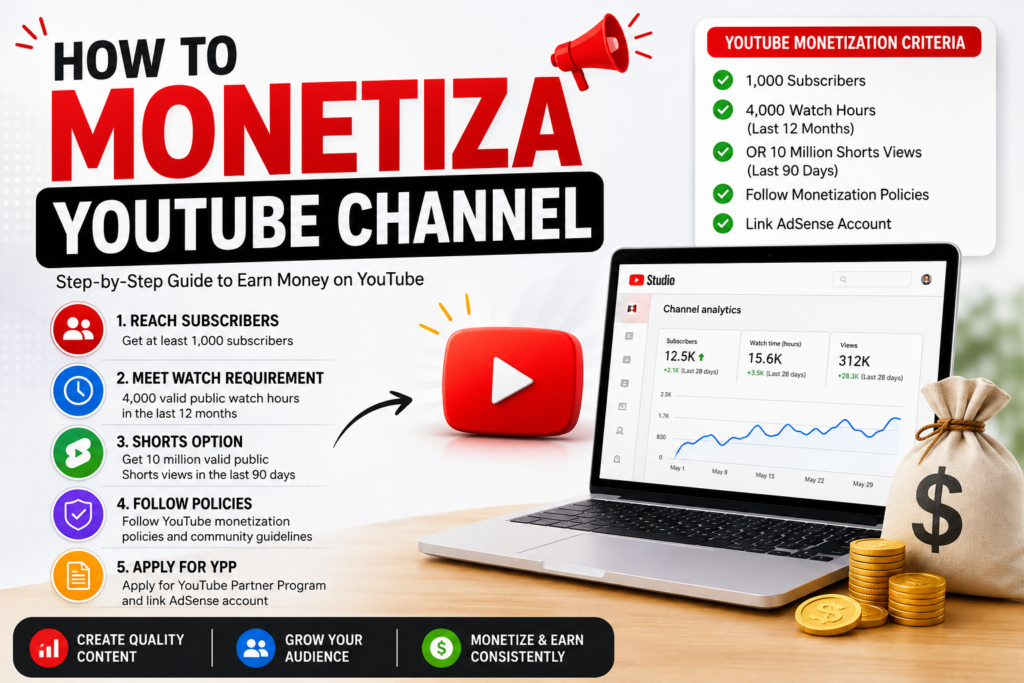
For creators who want advertising revenue, the main target is **1,000 subscribers** combined with either **4,000 valid public watch hours during the previous 12 months** or **10 million valid public Shorts views during the previous 90 days**.
How to Monitetiza YouTube Channel: Main Requirements
If your goal is to understand how to monitetiza youtube channel, start by focusing on the following requirements.
1. Reach the Subscriber Requirement
For full advertising revenue eligibility, your channel needs at least **1,000 subscribers**. This shows that you have built a substantial audience around your content.
There is also an earlier YPP entry point at 500 subscribers in eligible countries. At that level, creators can potentially access selected fan-funding and shopping features after meeting the additional requirements.
2. Meet the Watch Hour or Shorts View Requirement
You can qualify for advertising revenue through either of two routes:
* 4,000 valid public watch hours from long-form videos in the previous 12 months, **or**
* 10 million valid public Shorts views in the previous 90 days.
It is important to understand that watch hours generated from views in the Shorts Feed do not count toward the 4,000-hour requirement.
Therefore, creators should choose a content strategy that fits their strengths instead of simply chasing numbers.
Can You Monetize YouTube Shorts?
Can you monetize YouTube Shorts?** Yes. YouTube allows eligible creators in the Partner Program to earn revenue from ads shown between videos in the Shorts Feed.
For full ad-revenue eligibility, creators can qualify through **1,000 subscribers and 10 million valid public Shorts views within 90 days**. Once accepted, creators must also accept the Shorts Monetization Module to participate in Shorts ad revenue sharing.
However, getting a large number of views is not enough. Shorts must comply with YouTube’s monetization policies. Non-original clips, reuploads, compilations without meaningful original additions, and artificial views can be ineligible for revenue sharing.
Create Original and Valuable Content
One of the most important parts of YouTube monetization is content quality. YouTube expects monetized content to be original and authentic.
For example, tutorials, educational videos, original commentary, reviews, vlogs and other creator-led formats can provide genuine value when they are made with appropriate originality.
On the other hand, simply copying another creator’s video, making minimal changes, or repeatedly publishing mass-produced content can create monetization problems. YouTube’s current policy specifically addresses repetitive and mass-produced material as **inauthentic content**.
Understand Reused Content
Reused content is another major issue for new creators.
Using someone else’s material does not automatically mean a channel cannot be monetized. YouTube explains that transformed content may be eligible when the creator adds meaningful commentary, educational value, entertainment value, or substantial modifications.
Examples can include:
* Critical reviews using relevant clips
* Reaction videos with genuine commentary
* Edited footage with a new storyline and commentary
* Educational explanations that add substantial original value
Simply collecting clips from movies, television, social media or other channels with little original contribution can create monetization problems.
Other Things You Need Before Applying
Meeting the main performance thresholds is only part of the process. YouTube also lists other requirements for YPP, including following its monetization policies, having an eligible channel location, enabling two-step verification, and having an active AdSense for YouTube account linked to the channel.
YouTube reviews a channel before accepting it into the Partner Program. Reviewers can consider the channel’s overall theme, most-viewed videos, newest videos, metadata and other areas when evaluating whether the content follows the policies.
For creators under 18, payment arrangements also matter. YouTube’s AdSense guidance says ad revenue eligibility requires the creator to be at least 18, or to have a legal guardian over 18 handle payments through AdSense for YouTube.
Common Mistakes That Can Delay Monetization
Creators often focus heavily on subscribers and views while ignoring the quality and policy side of their channel.
Common mistakes include:
* Reuploading videos from other platforms
* Using copyrighted material without appropriate rights
* Publishing repetitive or mass-produced videos
* Buying or generating artificial views
* Ignoring advertiser-friendly guidelines
* Creating videos mainly to manipulate views rather than provide value
YouTube states that artificial or fake Shorts views are not eligible for revenue calculations. Its monetization policies also require content to provide genuine value rather than being generic, repetitive or manipulative.
Conclusion
YouTube monetization is not simply about reaching a subscriber or view target. Successful creators need to combine audience growth with original content, consistent quality and compliance with YouTube’s policies.
The most important targets for full advertising revenue are **1,000 subscribers plus either 4,000 valid public watch hours or 10 million valid public Shorts views**, followed by a successful channel review.
Shorts can also be a genuine monetization route, but creators must produce original content and avoid reused, repetitive or artificial material. By understanding the requirements before building a content strategy, you can create a stronger foundation for long-term channel growth.
CTA
Ready to build a monetizable YouTube channel? Start by choosing a clear niche, create original videos that genuinely help or entertain your audience, and track your progress through YouTube Studio. Focus on consistent improvement rather than chasing shortcuts, and review YouTube’s latest Partner Program policies before applying.